CaptainPaul Watson
Five decades on the front line for the whales. A founding member of Greenpeace, the founder of Sea Shepherd, and today the captain of the Captain Paul Watson Foundation. He has been jailed, hunted by an Interpol notice, and had his ship seized. He has never stopped.
A life between the harpoon and the whale.
From the first Greenpeace voyages to Operation 86 this summer, here are the moments that defined Captain Watson’s fight.
Born in Toronto
Paul Franklin Watson grows up in the fishing village of St. Andrews, New Brunswick, where he first sees the harm done to wildlife along the coast.
A founding member of Greenpeace
Watson joins the Vancouver activists protesting nuclear tests at Amchitka, the movement that becomes Greenpeace. He serves as one of its early directors. (His foundation calls him a founding member; Greenpeace describes him as an early member.)
First whale confrontation
On Greenpeace’s first whale campaign, Watson and his crewmates place small inflatables between a Soviet harpoon ship and a pod of sperm whales off California. The world sees whaling up close for the first time.
Founds Sea Shepherd
Convinced that protest alone was not enough, Watson leaves Greenpeace and founds the group that becomes the Sea Shepherd Conservation Society, built on direct action to enforce conservation law at sea.
Stopping the pirate whaler Sierra
Sea Shepherd rams and disables the notorious pirate whaling ship Sierra off Portugal. It never hunts again.
Iceland’s whaling fleet
Sea Shepherd crew sink two Icelandic whaling ships in Reykjavík harbor, beginning a 40 year standoff with Iceland’s whaling industry.
Honors
Inducted into the Animal Rights Hall of Fame in Washington, D.C. (2002) and awarded the Amazon Peace Prize by the President of Ecuador (2007).
Whale Wars
Animal Planet’s Whale Wars brings Sea Shepherd’s Antarctic campaigns against Japan’s whaling fleet into millions of living rooms.
The Jules Verne Award, and a red notice
Watson becomes only the second person after Jacques Cousteau to receive the Jules Verne Award. The same year, Japan secures an Interpol red notice against him that will follow him for more than a decade.
The Captain Paul Watson Foundation
Watson leaves Sea Shepherd and cofounds the Captain Paul Watson Foundation to continue the same mission: defend marine life through direct action.
Arrested in Nuuk
Danish police arrest Watson when his ship stops to refuel in Nuuk, Greenland, on Japan’s red notice. Japan asks Denmark to extradite him.
Five months behind bars, and a world speaks up
Hearing after hearing extends his detention. From inside Nuuk prison he writes to supporters, and on December 2 he marks his 74th birthday in a cell. Supporters around the world, including members of our Rotary family, write letters, send care packages and press for his release.
Free
Denmark’s Ministry of Justice refuses Japan’s extradition request, and Watson walks out of Nuuk prison after five months.
Red notice lifted
Interpol’s oversight commission suspends and then dismisses Japan’s red notice as politically motivated.
Our Rotary family in Reykjavík
Steve Bender speaks to Rotary Reykjavík International and meets Iceland’s President, Halla Tómasdóttir. See the visit below.
Operation Krill Wars
As the UN High Seas Treaty enters into force, the Foundation and Sea Shepherd France sail to Antarctica to confront industrial krill fishing, the base of the whales’ food chain.
Operation 86 and the Bandero
The Foundation returns to Iceland to stand between Hvalur’s harpoons and the fin whales. Its ship is seized, its crew deported, and 57 whales survive the season. Read the full story below.
Iceland considers ending whaling
Iceland’s government schedules a bill for February 2027 to rewrite its 1949 Whaling Act, with a permanent ban on commercial whaling among the options being considered. What’s in it.
Back home in Orange County
Captain Watson is a featured speaker at the Ohana Festival in Dana Point, California.
The seizure of the Bandero.
In the summer of 2026, Iceland’s last whaling company, Hvalur hf, owned by Kristján Loftsson, was licensed to kill up to 150 endangered fin whales. The Captain Paul Watson Foundation sent its ship, the Bandero, to stop it. Iceland sent its Coast Guard.
- June 2026: Operation 86 launchesThe Bandero sails into Iceland’s waters with Captain Watson directing the campaign. It must report its position to the Coast Guard every hour, while the whaling ships may hunt with their tracking signals switched off.
- Weeks of pursuitShadowed by Coast Guard aircraft, helicopters and patrol boats, the Bandero repeatedly forces the whalers off their hunting grounds.
- July 30: contact with Hvalur 9The Bandero intercepts the whaling ship Hvalur 9 and chases it back toward port. The Coast Guard responds with a ship, three small boats, a helicopter, an aircraft and armed special forces who board the Bandero.
- The ship is seizedThe Bandero is towed to Reykjavík. Phones, cameras and laptops are confiscated and the crew are questioned.
- August: 21 crew deportedAll 21 crew members are deported. No criminal charges are ever filed against the ship or any crew member. Non European crew are told they are banned from Europe for three years, a decision the Foundation’s lawyers are challenging.
- September 15: released, but not freeIceland’s Transport Authority releases the Bandero from detention. It remains held in Iceland by a civil suit from Loftsson seeking damages for the whales he did not kill. A hearing is set for December.
Quota: 150. Killed: 93. Spared: 57. Loftsson has blamed the weather, while suing the Foundation for the whales it cost him. (Season totals as reported by the Captain Paul Watson Foundation.)
"Every whale not killed is a victory."
Captain Paul Watson, September 2026
Meanwhile, Iceland's food and veterinary authority, MAST, confirmed violations during Hvalur's 2026 hunt after the Foundation submitted evidence of whales harpooned outside the permitted area and struck more than once.
Iceland is considering a permanent whaling ban.
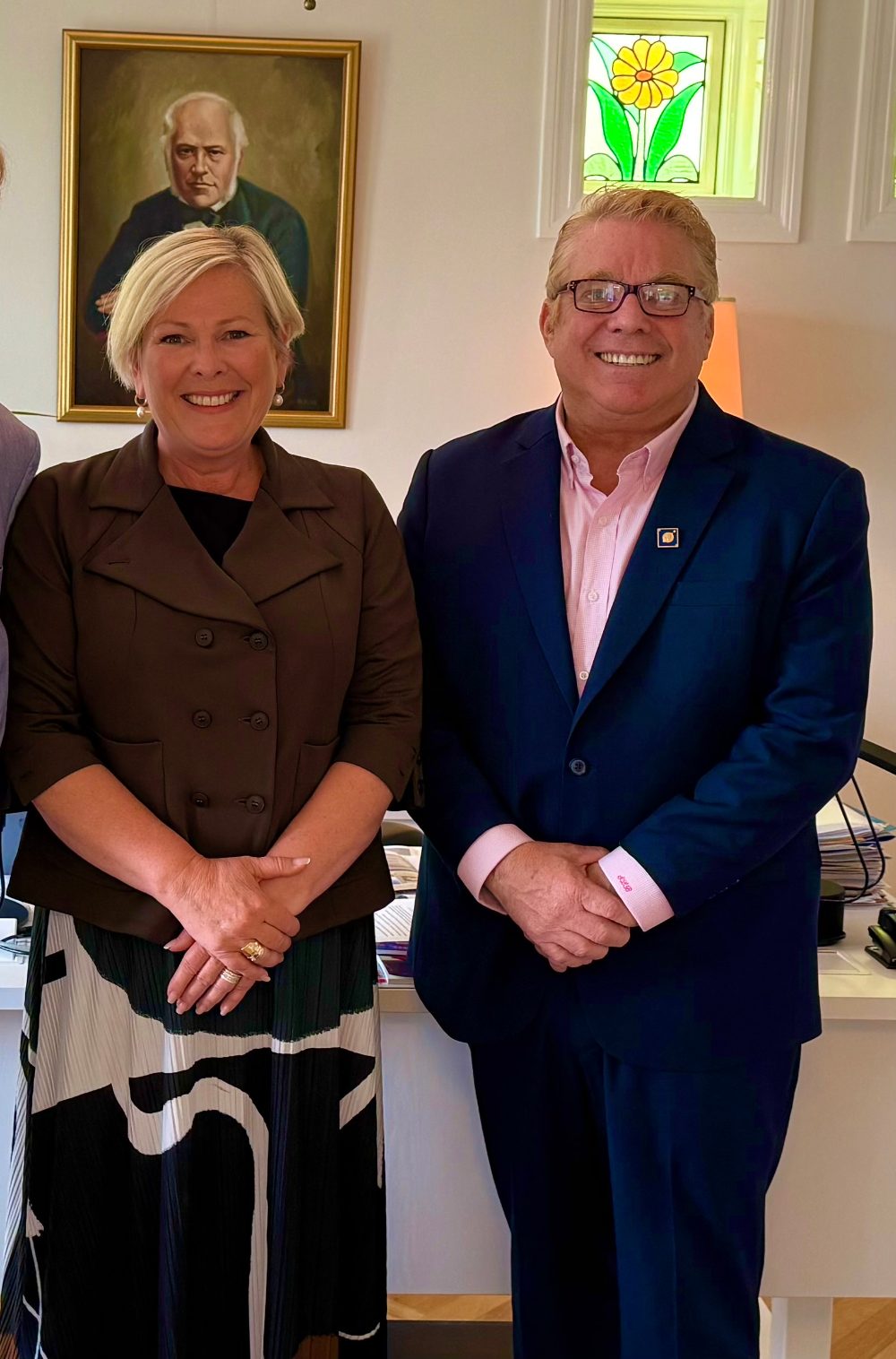
Steve Bender meets the President of Iceland
On June 12, 2025, Steve Bender, President of the Rotary Club of Newport Beach, was received by Iceland's President, Halla Tómasdóttir, at the President's office in Reykjavík, carrying a message from the Rotary family about the future of Iceland's whales and oceans.
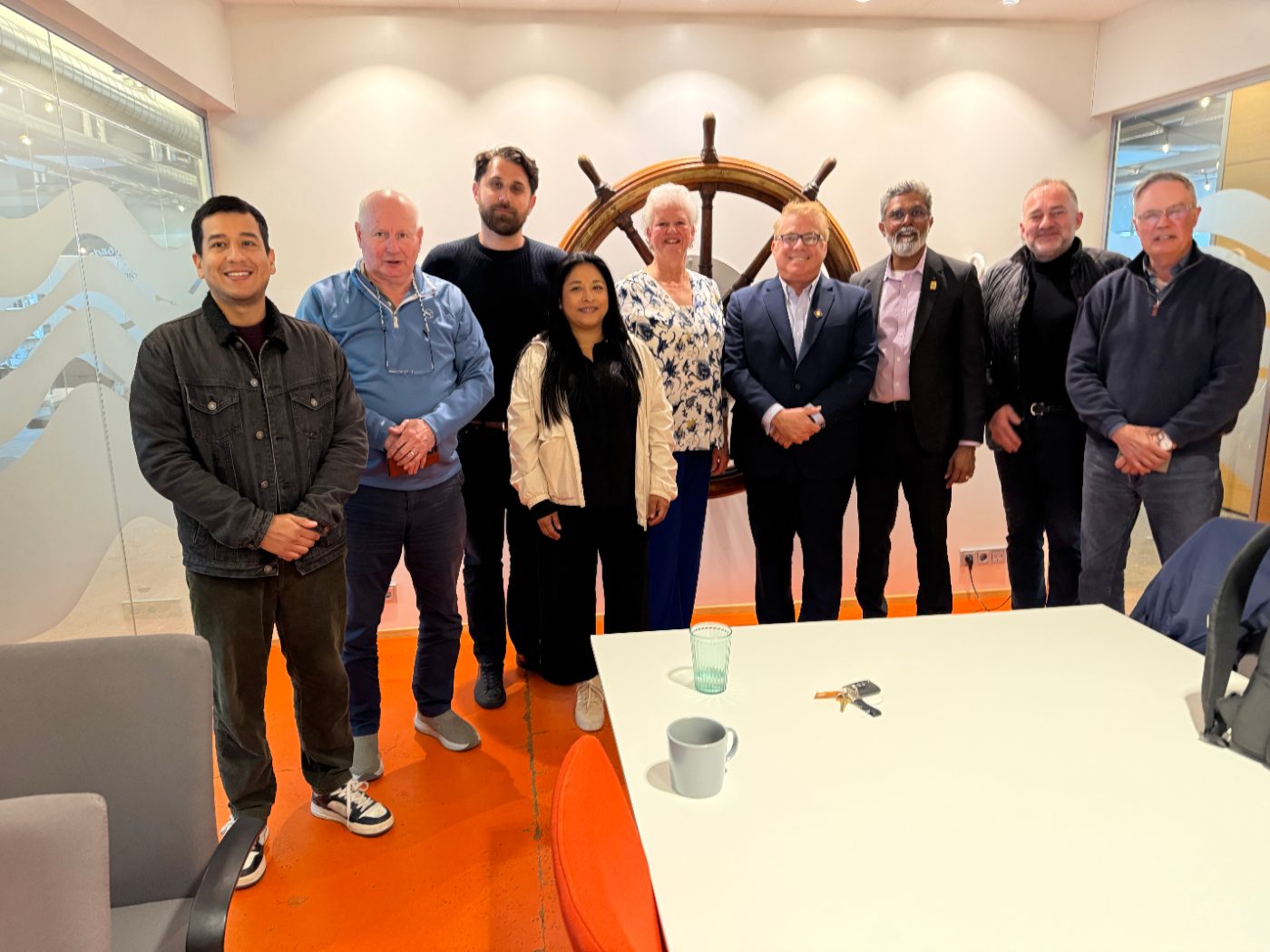
Speaking to Rotary Reykjavík International
The day before, on June 11, 2025, Steve spoke to Rotary Reykjavík International, sharing The Whale Projects and building ties between Newport Beach and Iceland's Rotarians.
Why it matters
Iceland is one of only three countries still whaling commercially in defiance of the International Whaling Commission's 1986 moratorium. Fin whales, its main target, are listed as vulnerable to extinction.
A 2023 government report found some harpooned whales took up to two hours to die. Japan, once the main buyer, now hunts its own, and whale meat sits unsold in Icelandic warehouses. More than 700 complaints about Icelandic whaling have reached the EFTA Surveillance Authority.
Decades of pressure from Captain Watson and the conservation community, and this summer's Operation 86, have kept the world watching.
What to watch: whether the bill ends whaling on passage or lets Hvalur's licence run to 2029, and whether the harpoon ships sail again in June 2027.
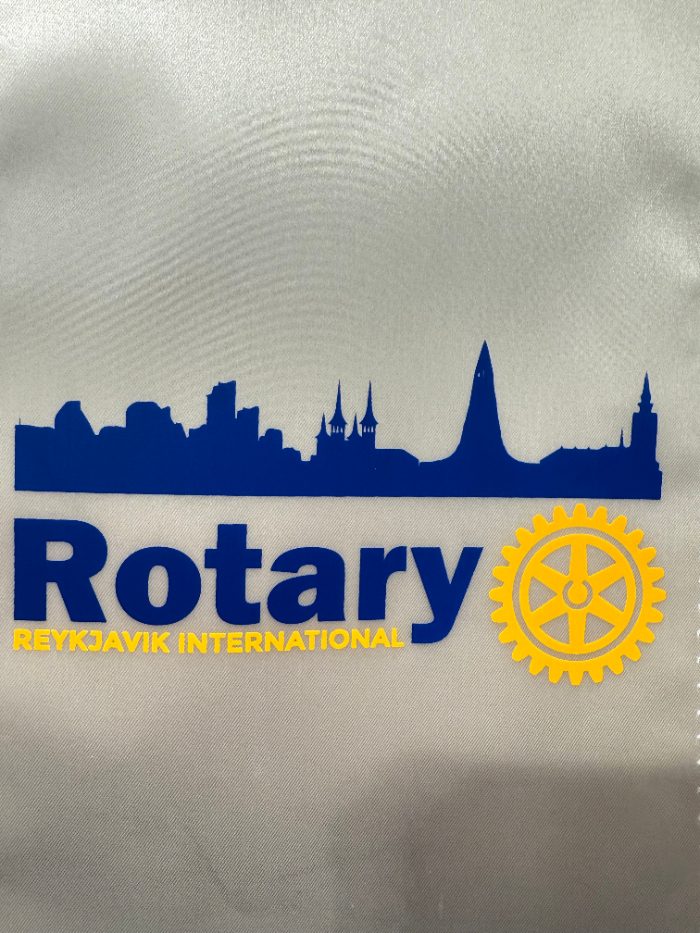
A club banner from Rotary Reykjavík International, exchanged during Steve's June 2025 visit.
Stand with the Captain.
Help bring the Bandero home and keep the Foundation's ships between the harpoons and the whales.
Donate to the Foundation Operation 86 updatesSources
- Captain Paul Watson Foundation: biography
- Captain Paul Watson Foundation: Major Update on Operation 86
- Captain Paul Watson Foundation supporter updates, September 15 and September 29, 2026
- SURFER: Captain Paul Watson on Iceland, Interpol, and the Fight That Never Ends (September 2026)
- Humane World for Animals: Iceland confirms whaling bill for February 2027
- Iceland Review: Government to propose permanent commercial whaling ban
- Oceanographic: Iceland to submit bill banning whaling
- Species Unite: Bill that could ban commercial whaling in Iceland